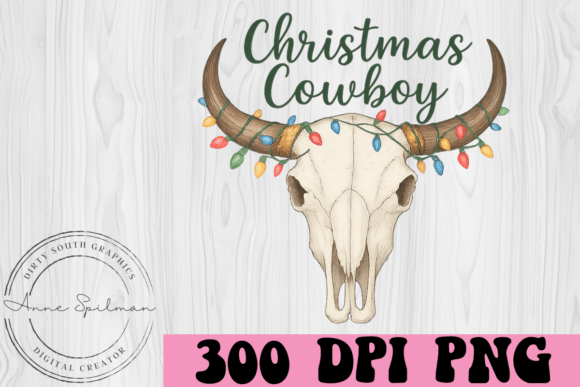
Christmas Cowboy Bull Skull Lights Review
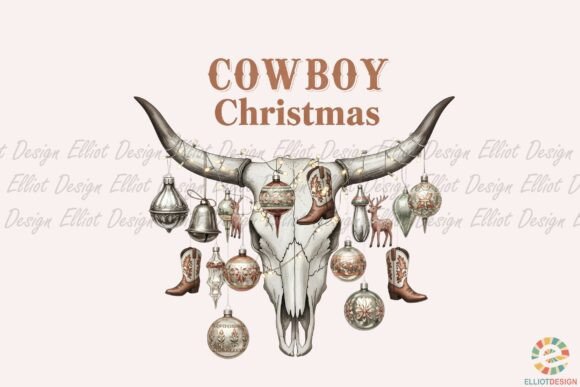
As a designer who spends more time staring at stitch lines and fabric grain than actual sunlight, I approach every new digital asset with a healthy dose of skepticism. The market is flooded with "holiday" graphics that look festive on screen but turn into muddy, unrecognizable blobs once the needle starts moving. That is exactly why I took Christmas Cowboy Bull Skull Lights for a spin before recommending it to my network of makers and small business owners. This isn’t just another clipart file; it’s a specific aesthetic choice that bridges the gap between rugged western charm and cozy holiday warmth.
I received this design as a high-resolution PNG, specifically noted as 300 dpi with a transparent background and dimensions exceeding 2500 pixels on the longest side. It is crucial to note right away that this is NOT an SVG file. For those of us working in machine embroidery, this distinction changes everything. You are not getting editable vector paths; you are getting a raster image intended for tracing or digitizing. My review focuses on how this graphic translates from a flat pixel grid into a tangible, sellable handmade product.
The First Impression: Mood and Visual Personality
When you first load Christmas Cowboy Bull Skull Lights onto your workspace, the mood is immediate. It avoids the cliché of bright reds and greens dominating the frame. Instead, it leans into a rustic, perhaps slightly edgy vibe that appeals to a specific demographic—the kind of customer who buys leather-bound journals, owns a vintage Ford truck, and prefers their holidays with a side of grit. The skull motif is softened by the "lights" element, likely suggesting string lights or glowing accents, which adds a layer of whimsy without sacrificing the tough exterior appeal.
From a design perspective, the composition feels balanced. There is enough negative space around the central figure to allow for creative placement on garments, yet the focal point is strong enough to stand alone on a tote bag or a kitchen towel. It creates a narrative instantly: this is for the person who has everything and wants something unique. It feels like a design that belongs in a boutique shop rather than a mass-market big-box store. The visual personality is confident, making it an excellent candidate for custom apparel where branding and personal style intersect.
Real-World Application: Where Does This Design Shine?
I put this graphic through its paces by imagining it in various real-life scenarios. The first project that came to mind was a custom embroidered patch for a denim jacket. Because the source is a high-quality PNG, tracing the outline allows for a clean satin stitch border that would pop against dark denim. The contrast between the rugged skull and the festive lighting makes for a striking conversation starter at craft fairs or coffee shops.
Another strong use case is home decor. I envision this design on a heavy cotton canvas apron for a barbecue enthusiast or a tea towel for a rustic-themed kitchen. The "lights" aspect of the design lends itself well to warm color palettes—amber, gold, and soft white threads—that would look incredibly inviting on neutral fabrics like oatmeal linen or cream muslin. It transforms a simple household item into a personalized gift that feels curated and thoughtful.
For Etsy sellers and small shop owners, this design offers versatility. It works beautifully as a central motif on a sweatshirt embroidery project, placed slightly off-center over the heart for a casual, lived-in look. It also has potential as a baby embroidery piece, though care must be taken with thread selection to ensure it doesn’t feel too aggressive for a nursery. Softened with pastel backing or paired with a gentle font, it could become a standout item in a "Western Baby" collection. The key here is adaptability; the core graphic remains constant, but the surrounding elements can shift the tone entirely.
Technical Considerations for Embroidery Designers
Since this is a PNG and not a native embroidery file, the burden of translation falls on the digitizer or the user if they are using automated tracing software. Here is what you need to watch out for to ensure your finished product looks professional.
- Stitch Density and Detail: The "lights" portion of the design likely contains small, intricate details. When converting this to a machine embroidery design, be wary of creating overly dense fill stitches. If the density is too high, the fabric will pucker, and the fine details may merge together. Use running stitch or sparse fill stitches for the smaller light elements to maintain clarity.
- Thread Color Contrast: Because the original is a color PNG, you have a head start on color planning. However, always test your thread choices against your actual fabric. A light-colored skull on a dark fabric requires a different underlay and possibly a cutaway stabilizer than a dark skull on light fabric. Ensure there is enough contrast so the design doesn’t get lost in the weave of the material.
- Hoop Size Constraints: While the digital file is large (2500+ pixels), your physical hoop size is limited. Before committing to a production run, confirm that the traced design fits comfortably within your standard 4x4, 5x7, or larger hoops. If the design is wide, consider placing it vertically on a tote bag or horizontally across the chest of a sweatshirt.
- Fabric Texture: This design performs best on smooth, stable fabrics. Avoid highly textured materials like bouclé or thick chenille, as the needle may struggle to penetrate consistently, leading to skipped stitches. Stretchy knits require a stabilizer that won’t leave permanent marks, such as a tear-away or wash-away backing, depending on the fabric weight.
Where to Exercise Caution
No design is perfect for every surface. I would advise against using Christmas Cowboy Bull Skull Lights on very small items like socks or tiny decorative buttons unless you are simplifying the design significantly. Small hoop sizes often result in loss of detail, and the intricate nature of the "lights" might disappear entirely. Similarly, curved surfaces like baseball caps can distort straight lines or symmetrical elements if not hooped perfectly. If you attempt this on a cap, expect to do significant testing to ensure the curvature doesn’t warp the skull’s shape.
Additionally, be mindful of products that undergo frequent, harsh washing. If you are selling these items as commercial merchandise, advise customers to wash them inside out on cold cycles. Even with proper stabilization, complex designs with mixed stitch types can suffer over time if neglected.
Final Verdict: Is It Worth the Investment?
For creative entrepreneurs looking to expand their catalog with unique, non-traditional holiday items, Christmas Cowboy Bull Skull Lights is a solid addition. It moves beyond the generic snowman and reindeer tropes, offering a fresh angle that resonates with modern tastes. The high resolution of the source file ensures that when you trace and digitize it, you retain crisp edges and clear definition.
However, remember that this is a starting point, not a finished embroidery file. Your success with this design depends on your skill in translating the graphic into stitch data. Take the time to inspect small details, test on scrap fabric, and verify your licensing rights before selling finished items. If you treat it with the respect due a professional design asset, it has the potential to become a bestseller in your handmade product line, appealing to buyers who want something with character, warmth, and a little bit of edge.